Man-to-Man or Zone: Two Ways to Defend Space
Man-to-man or zone defence is easier to read when you know who defenders track, which spaces they protect and how the attack can draw them out.
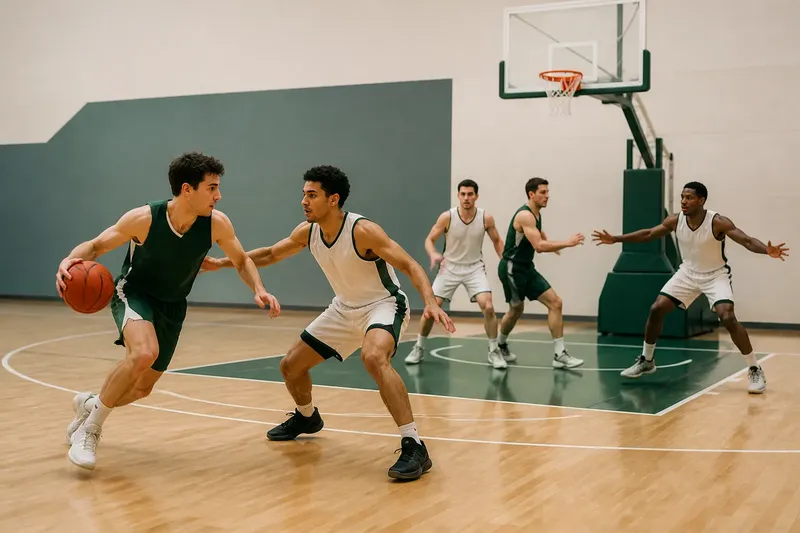
Why has one defender followed an attacker across the court while a teammate stays near the basket? Man-to-man or zone defence offers two different answers: one assigns defenders to opponents, the other assigns them areas. Watch what a defender responds to, and the shape of the defence becomes easier to read.
People or spaces
In man-to-man defence, each defender starts with responsibility for a particular opponent. That does not mean following them blindly everywhere. A teammate may help if an attacker drives towards the basket, and defenders may exchange opponents after a screen. The opponent remains the basic reference point, even when responsibilities briefly change.
In a zone defence, players start with responsibility for parts of the floor. One may protect the space near the basket, while others cover the sides or areas farther out. If an attacker moves into another defender’s area, responsibility can pass between teammates.
Look beyond the defender nearest the ball. If several players shift as the ball moves from one side of the court to the other, they may be protecting areas together. If a defender tracks one opponent while teammates adjust around that matchup, the defence may be man-to-man.
Why assignments blur?
Why does a defender leave their opponent?
In man-to-man, leaving an opponent can be a deliberate help move. If the ball-handler gets past their defender, a teammate may step across to slow the drive or protect the basket. The original defender then needs to recover, while another teammate may cover the opponent left open.
In a zone, a defender may leave an attacker because that player has moved out of the defender’s area. The defender shifts towards the ball or passes the attacker to a neighbour. It can look like help defence, but the zone player is protecting space first.
Follow the defender after the ball moves on. If they turn to find and resume guarding a particular opponent, that points towards a man assignment. If they settle back into an area and pick up whoever enters it, they are behaving more like a zone defender.
Why do two defenders chase the ball?
A drive, screen or quick change of direction can bring two defenders towards the same attacker. In man-to-man, one may be helping the primary defender while the assigned opponent is temporarily unguarded. In a zone, two neighbouring players may close the ball-handler as they cross between areas.
Watch the recovery. If one defender returns to an opponent and the other to a familiar area, their responsibilities become clearer. If both stay with the ball-handler, the defence may be slow to recover or deliberately applying extra pressure.
Why is a shooter suddenly open?
In man-to-man, an open shooter can appear after a defender helps on a drive, loses contact around a screen or switches onto another opponent. The attack may be forcing a defender to choose between stopping the ball and staying close to the shooter.
In a zone, an opening can appear between areas. Attackers may spread out and move the ball across the court, making defenders shift from side to side. If the pass reaches a new area before the defence adjusts, a shooter may have space.
Trace the pass before the shot. Did a defender leave an opponent to help, or did the attack move the ball into a gap between areas? That sequence tells you more about the coverage than whether the shot goes in.
How do screens change assignments?
A screen puts an attacker in a defender’s path, helping the ball-handler turn the corner or creating room for a teammate. In man-to-man, defenders may go around the screen, exchange opponents or bring a second player towards the ball. Any of those choices can change who is responsible for whom.
A zone can react to a screen too, particularly near the ball or between areas. Defenders may shift together, with one taking the ball-handler and another protecting the space behind. Watch whether they exchange opponents or keep their positions in the formation; a screen does not automatically mean a switch.
What each defence protects
Man-to-man prioritises direct responsibility for opponents. It can keep a defender close to a dangerous scorer and make individual matchups easier to spot. Screens, cuts and drives test how well teammates communicate and recover without leaving another attacker free.
Zone prioritises control of areas and routes into them. It can crowd a protected space and ask the attack to move the ball before finding an opening. The seams between defenders and the less-protected parts of the formation are natural pressure points.
Neither label tells you how intensely a team is defending. A man defence can give opponents room to protect the basket, while a zone can press towards the ball. Focus on the underlying assignment, not whether the defence looks tight in one moment.
Read one possession
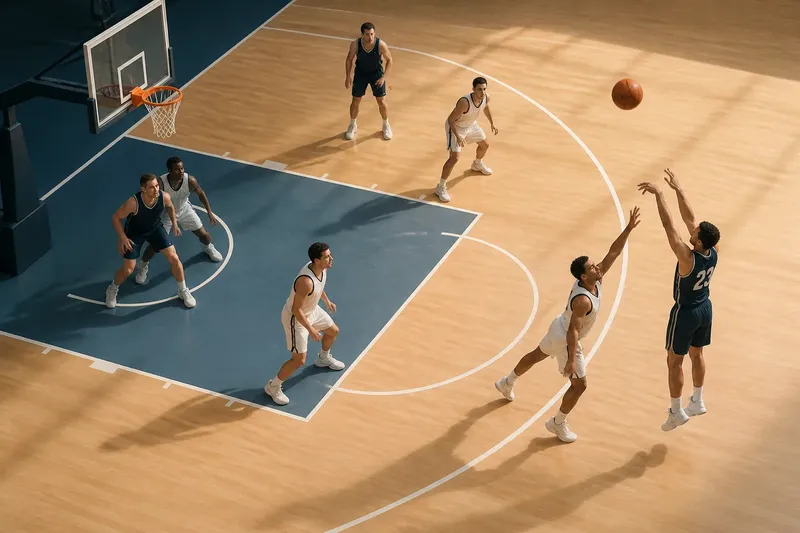
Say you are watching a basketball possession. The ball-handler drives from the wing, the nearest defender is beaten, and a teammate steps across from the middle. Another defender moves towards the shooter left open. After a pass, the first defender returns to the same opponent: that sequence fits man-to-man help and recovery. If the defenders instead re-form around their areas and take whoever enters them, it fits a zone.
Use these observations to decide what to watch next:
- Check whether a defender away from the ball tracks one opponent. If they do, follow that matchup; if they shift with the ball and hold a floor area, watch the team’s zone shape instead.
- Check whether the whole line of defenders moves when the ball crosses the court. If they shift together, look for area responsibilities; if one defender follows an opponent while others adjust separately, look for man coverage.
- Check what happens when a defender helps on a drive. If they return to the same opponent afterwards, treat it as man-to-man help; if they settle into an area, track who enters that space instead.
- Check whether two defenders converge on the ball-handler. If one peels away to an opponent and the other resumes a floor position, note the distinct assignments; if both stay, watch for a deliberate double-team or a late recovery.
- Check who covers the shooter after a pass out of a crowded area. If a defender follows that shooter, watch for a switch or recovery; if the nearest zone defender closes out, follow the space they leave behind.
- Check how defenders react to a screen. If they exchange opponents, note the new matchups; if they keep their areas and shift together, read the movement as a zone response.
- Check whether the same pattern appears on another possession. If it does, treat it as evidence of the team’s usual coverage; if it does not, allow for a one-off switch, help rotation or change of defence.
Imagine a made-up possession: the ball starts with a guard on the right wing, a forward sets a screen, and the guard drives towards the basket. The defender assigned to the guard goes around the screen, while a teammate steps up from the middle. After the guard passes to a shooter in the corner, the first defender closes out to the guard again and the helper retreats to the middle. That recovery points towards man-to-man help; if the defenders instead returned to their floor areas and the corner defender took whoever arrived there, the better reading would be zone.
What to watch next
Once you have a sense of the assignment, look for the pressure point. Against man-to-man, watch screens, cuts and the defender who has to help. Against a zone, watch the seams and how quickly defenders shift towards the ball. Those details explain why an attack changes its spacing or moves the ball to someone else.
For a clearer read of man-to-man or zone defence, keep one defender in view after the ball moves. Their recovery shows whether the team is organising around opponents or territory, and gives you a useful clue about the next defensive decision.